


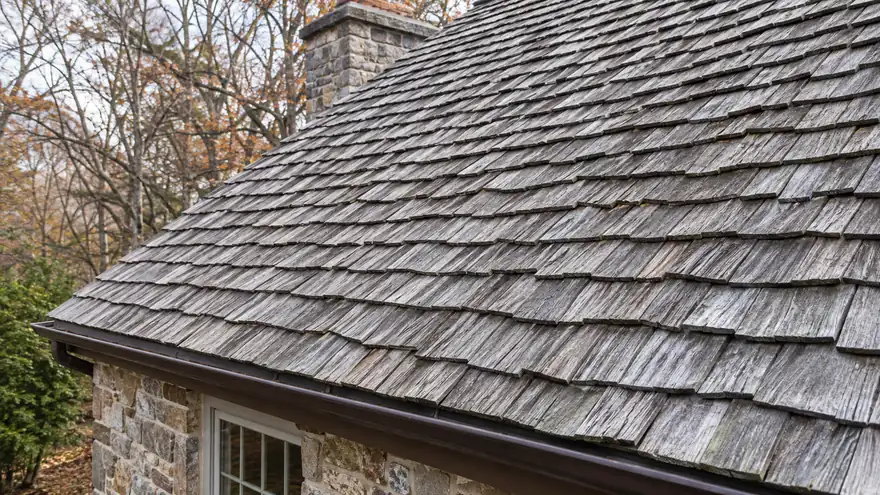


A cedar roof turning gray does not, by itself, mean the wood is rotten. Natural weathering changes cedar’s appearance, while decay involves deterioration of the material. The distinction depends on condition, not color alone.
That matters when you are deciding whether to monitor an older roof, arrange repairs, or discuss replacement. A photograph may show gray shakes clearly and still reveal little about their remaining strength or the layers underneath. Homeowners in Greater Philadelphia should treat visible changes as information for an inspection rather than a diagnosis made from the driveway.
What normal cedar weathering can look like
New cedar generally loses its fresh wood tones as it weathers. The roof may develop a silver-gray appearance, with differences between sun-exposed and shaded sections. Small surface checks can also occur as the material responds to moisture changes.
Uniform gray color is not proof that every shake is sound. Equally, a darker patch is not proof of decay. The location of a change, how it develops, and the condition of nearby shakes all belong in the assessment.
Which changes deserve a closer look?
A cedar specialist should investigate material that has lost integrity, shakes that have moved, and openings that may affect water shedding. Advanced decay can leave wood soft or spongy, but checking that condition is a professional task. Do not climb up or probe shakes yourself.
Useful observations include:
- Missing pieces or fresh fragments on the ground.
- Shakes that appear displaced or severely curled.
- A localized area that remains visibly damp after surrounding areas dry.
- A new interior stain, drip, or change near an existing stain.
None of these observations establishes the complete cause. A leak may involve flashing or another roof detail, and a missing shake may relate to attachment as well as wood condition. Ask the contractor to explain which evidence supports each finding.
Why the location of deterioration matters
Compare the affected area with the rest of the roof. An isolated concern near a roof junction calls for a different investigation from similar deterioration across several slopes. Shaded sections, debris pockets, and transitions deserve attention because the surrounding conditions can influence drying and water movement.
For example, gray shakes across a roof and a small persistent damp area near a valley should not be treated as one uniform problem. The inspector needs to determine whether debris, a roof detail, or damaged material is contributing to that localized condition.
This is also why replacing a visibly damaged shake may not resolve every issue. The assessment should consider what caused the damage and whether adjoining materials are affected.
Cleaning does not restore deteriorated wood
Changing the appearance of a cedar roof does not establish that it is sound. A cleaning treatment cannot rebuild wood that has decayed, and an attractive surface can still conceal problems at attachments or roof transitions.
Avoid choosing a coating simply because it promises to make old cedar look new. The Cedar Shake & Shingle Bureau’s maintenance guidance cautions against sealing cedar roofs in ways that trap moisture. Any proposed treatment should be assessed for the actual roof, its existing treatment history, and the product instructions.
Ask the contractor to separate appearance-related maintenance from necessary repairs in the written recommendation. That makes it easier to understand what each part of the work is expected to achieve.
What should the inspection explain?
A useful assessment should identify the affected areas, show representative photos, and describe the limits of the inspection. Ask whether the findings point to isolated damaged shakes, a repeated condition, or a roof detail that needs attention.
Request an explanation of repair options and the condition of adjacent material. If replacement is recommended, ask what evidence makes localized repairs unsuitable. Roof age provides context, but it should not be the only reason given for a major project.
Top Peak Roofing offers cedar shake roofing and repair services for Bucks County and Greater Philadelphia properties. Request a free inspection to discuss the changes you have noticed and receive recommendations based on the roof’s condition. Gray color is a starting observation; the next decision should come from a closer assessment.
