


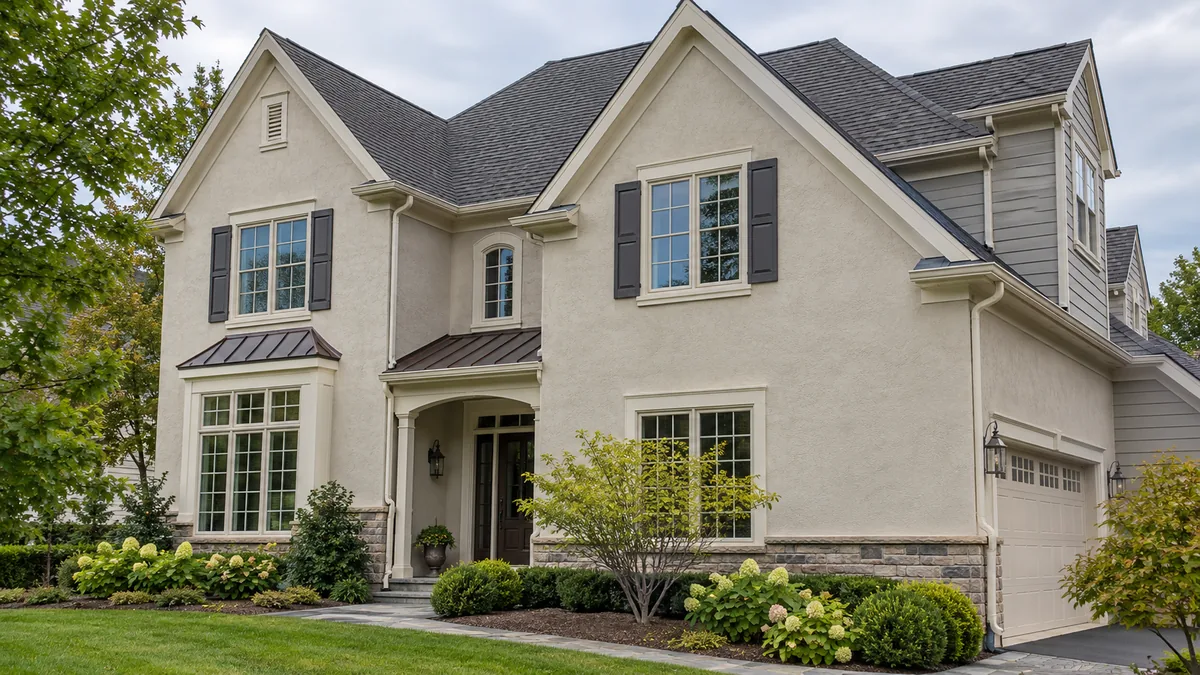


Stucco can be an attractive, durable exterior finish when it is installed and maintained as part of a well-managed wall system. When moisture gets behind the surface, however, the visible crack or stain may be only one part of a larger issue. Understanding the difference between a focused repair and broader remediation helps Pennsylvania homeowners ask the right questions before authorizing exterior work.
Top Peak Roofing evaluates exterior conditions as part of its siding installation and replacement services. An inspection can help identify visible concerns around wall surfaces, trim, windows, roof transitions, and drainage. The right scope depends on the actual condition of the property, not on a label alone.
What is stucco repair?
Stucco repair is a targeted correction to a limited, understood problem. It may involve addressing a crack, patching a small damaged section, restoring a finish, or correcting a detail where the underlying wall system is otherwise performing as expected. A repair can be a practical choice when the issue is localized and the source of moisture or movement has been identified.
The important word is understood. Simply covering a crack or applying a new surface finish does not resolve the problem if water is entering behind the stucco. A contractor should explain the observed condition, the likely source, and what the proposed repair is designed to address.
What does remediation mean?
Stucco remediation is a more extensive process used when an evaluation finds moisture-related concerns or other conditions that extend beyond one isolated surface defect. The work may require opening affected areas, addressing damaged components, correcting water-management details, and rebuilding the exterior assembly as appropriate for the scope.
Remediation is not automatically necessary whenever a home has stucco. It is a condition-based recommendation. The proper approach depends on factors such as the location and extent of damage, the wall details involved, drainage conditions, and what is found during assessment. A reputable contractor should avoid promising an answer before the property has been inspected.
Signs that deserve an exterior assessment
Some symptoms can have more than one cause. They are still useful reasons to seek professional guidance, especially if they recur after repairs or appear around vulnerable transitions. Watch for:
- Cracking, staining, bulging, or areas that look uneven.
- Gaps around windows, doors, trim, or wall penetrations.
- Peeling paint, deteriorated caulk, or moisture marks inside the home.
- Soft or damaged trim, especially near rooflines and windows.
- Overflowing gutters or water that regularly runs against exterior walls.
These signs do not prove hidden damage on their own. They do indicate that the exterior should be evaluated rather than ignored.
Why roof and gutter details matter
Exterior systems meet at rooflines, walls, windows, and drainage points. A roof leak, failed flashing, or overflowing gutter can direct water toward siding or stucco details. Conversely, wall defects can mimic a roof leak when water enters around a transition.
That is why a property-wide look is so valuable. A roof inspection can review the roof and visible transition details, while an assessment of gutter installation and repair can identify drainage concerns that place water too close to the home. Looking at these systems together helps avoid treating one symptom while missing another contributing condition.
Questions to ask before choosing a scope
Before you approve stucco or siding work, ask for direct answers to a few practical questions:
- What conditions were observed, and where are they located?
- Is the proposed work a localized repair or a broader remediation plan?
- What is believed to be allowing moisture or damage to continue?
- Which areas will be opened, repaired, or replaced?
- How will the home be protected, and how will the completed work be checked?
Clear answers are more helpful than broad promises. They give you a basis for comparing scopes and deciding what is appropriate for your property.
Get straightforward exterior guidance
Pennsylvania’s rain, snow, wind, and seasonal temperature changes make dependable exterior details important. Top Peak Roofing provides inspection-led recommendations for roofing, siding, gutters, and related exterior concerns throughout Greater Philadelphia.
If you see warning signs around your stucco or exterior walls, request a free inspection. The team can help you understand the visible conditions and discuss a practical next step.
